Product Description
PCT-106-CONNECTOR: 6-port push wire terminal block for CCTV wiring
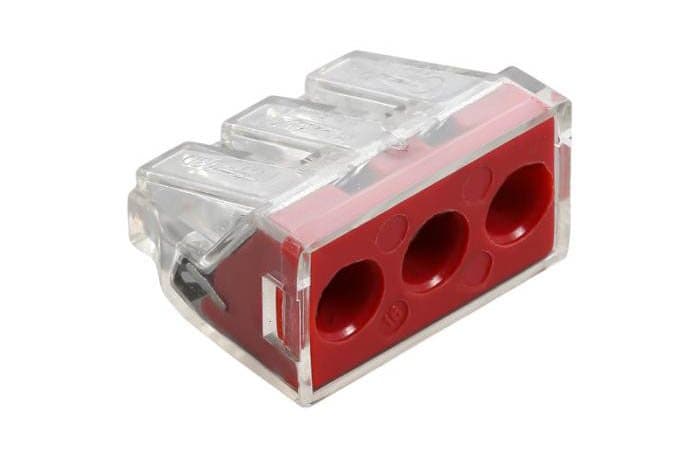
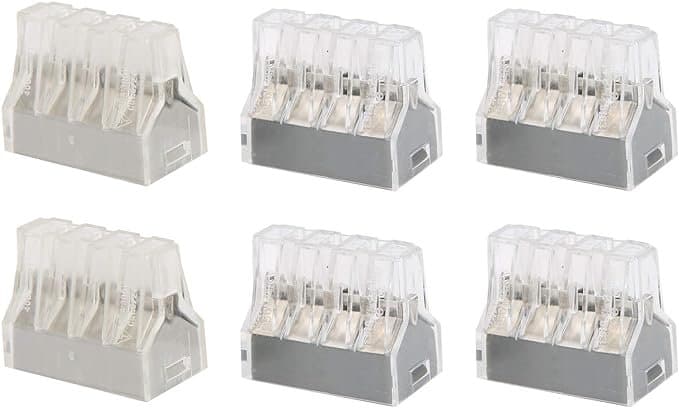
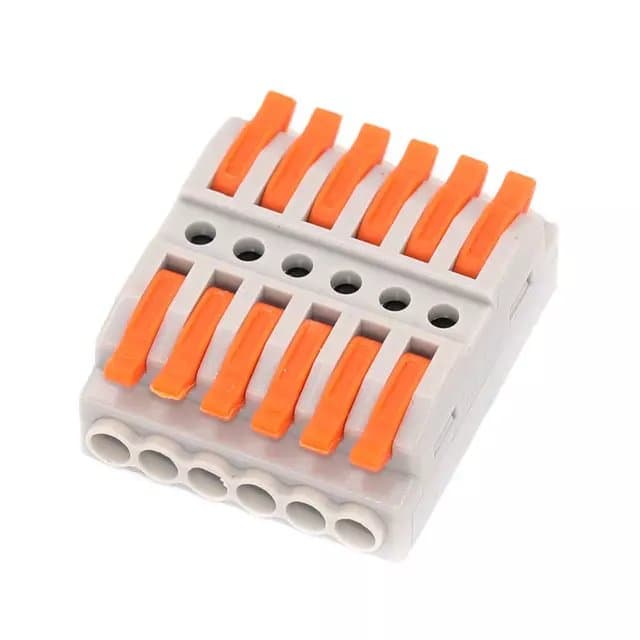
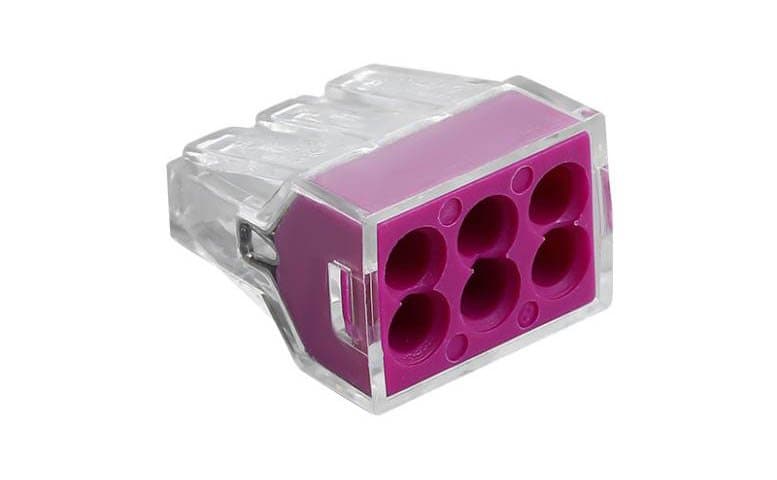
The PCT-106-CONNECTOR (MPN: PCT-106) is a 6-port inline push wire connector for terminating and distributing conductors in CCTV power and structured cabling runs. Six independent ports let you join or branch conductors inside junction boxes, camera housings or equipment enclosures without a separate distribution board.
Termination
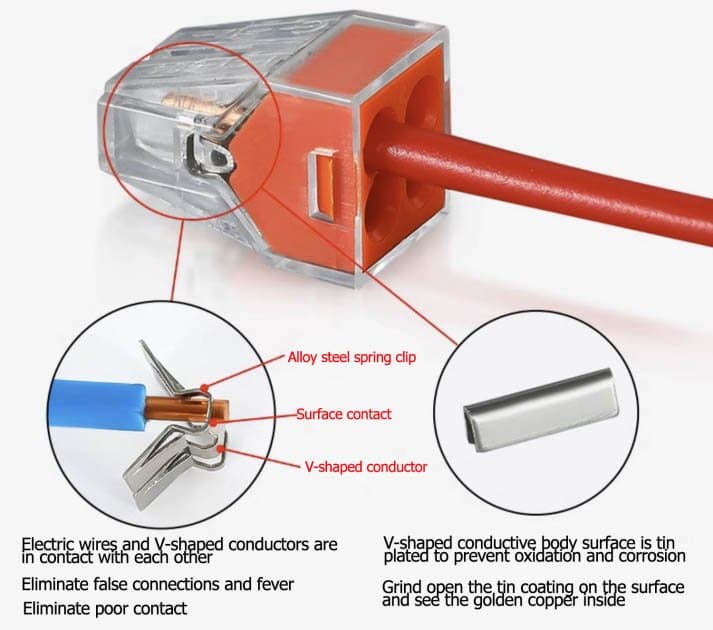
Push-in spring clamp ports accept the conductor directly — no screwdriver, no crimp tool. That speeds up first-fix and reduces the tool count on a van for multi-camera installs.
- Conductor types: solid and stranded copper, as used in CCTV power leads, alarm wiring and low-voltage control circuits
- Ports: 6 independent connections per block
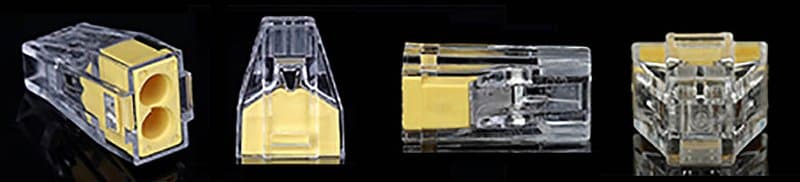
- Housing: transparent, insulated — lets you visually confirm each conductor is fully inserted before closing up the enclosure
- Form factor: compact inline body, suited to junction boxes, camera housings and network cabinets
Where it fits on a job
Use the PCT-106-CONNECTOR anywhere a run needs splitting or joining without a full termination panel: mid-run power taps for PTZ or bullet cameras, tidy conductor management inside dense enclosures, or general structured cabling where a screw terminal block is overkill.
Because the housing is transparent, snagging a bad insertion at commissioning rather than on a callback is straightforward — worth factoring into any multi-drop power distribution design.
Technical Specifications
Frequently Asked Questions
What conductor types does the PCT-106-CONNECTOR accept?
It accepts both solid and stranded copper conductors, as commonly used in CCTV power cables, alarm wiring and low-voltage control circuits.
Do I need tools to terminate the PCT-106-CONNECTOR?
No, conductors simply push straight into the spring clamp, so no screwdriver or crimping tool is needed.
How many wires can one PCT-106-CONNECTOR block handle?
Each block provides 6 independent push wire ports for joining or distributing conductors.
Can I check whether a conductor is properly inserted?
Yes — the housing is transparent, allowing visual inspection of each conductor's insertion before the enclosure is closed up.