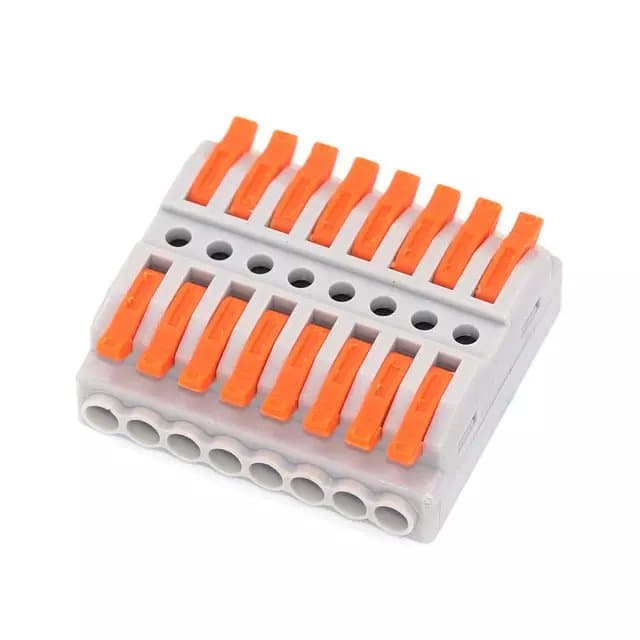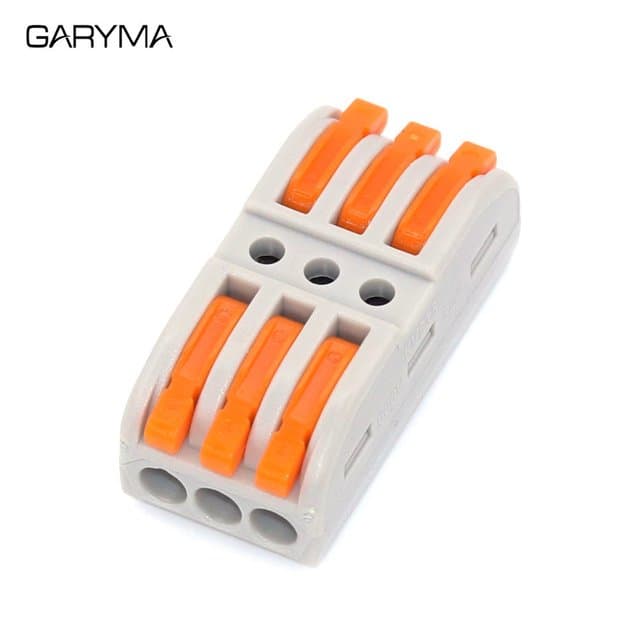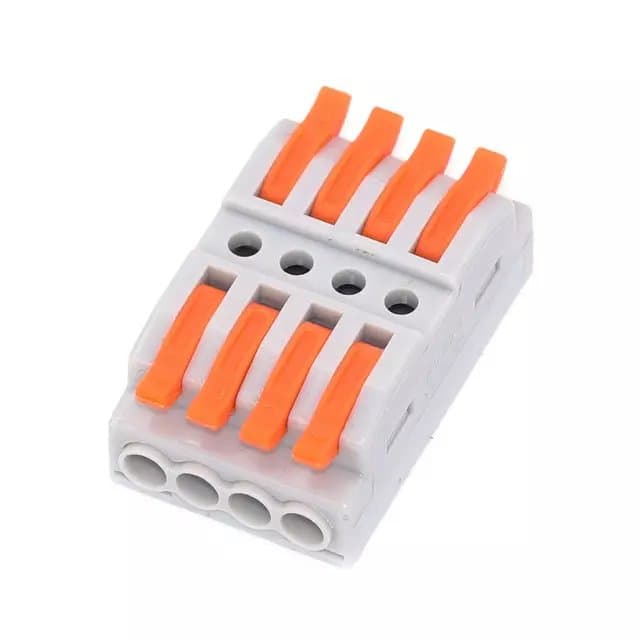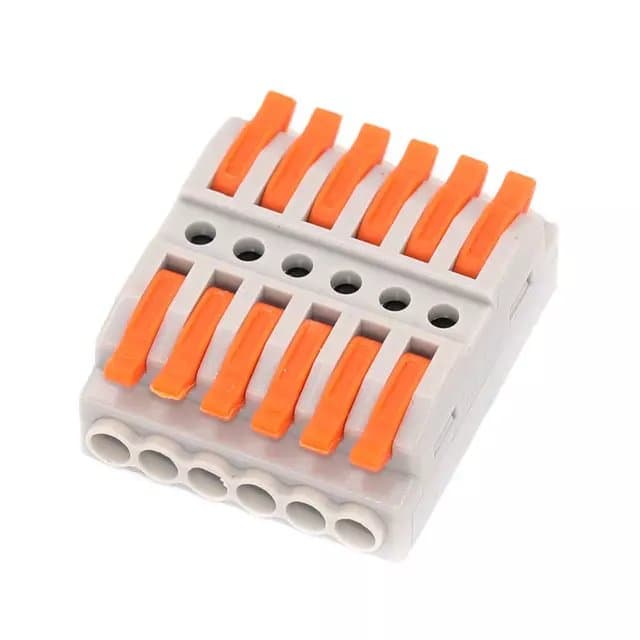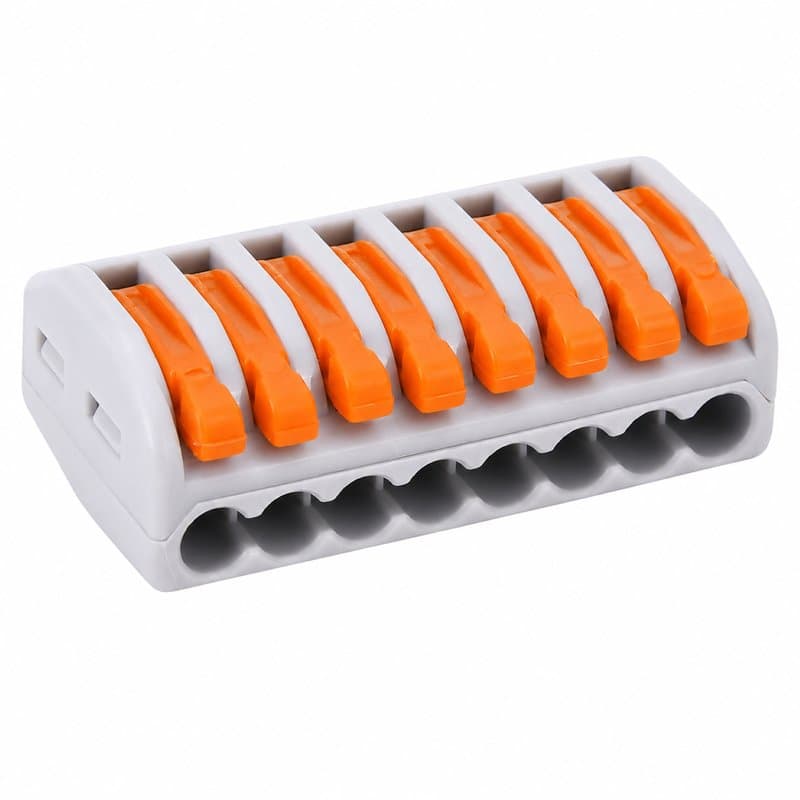
Product Description
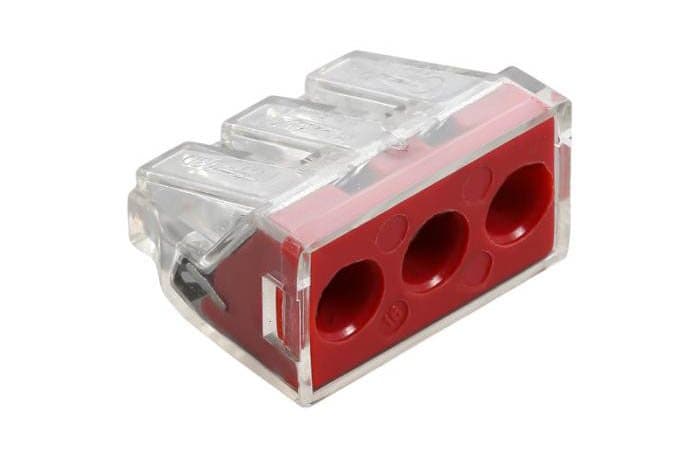
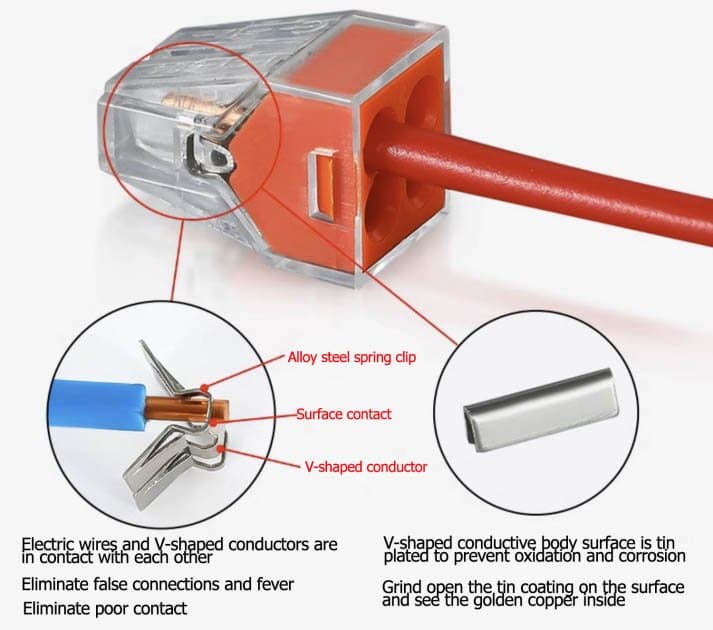
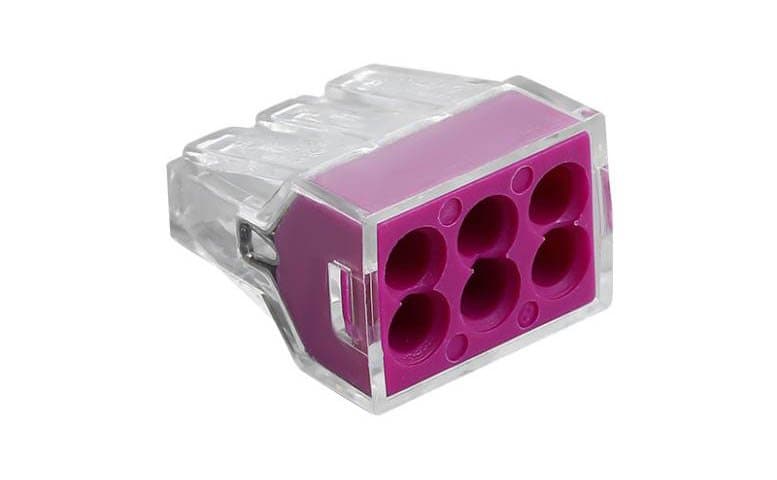
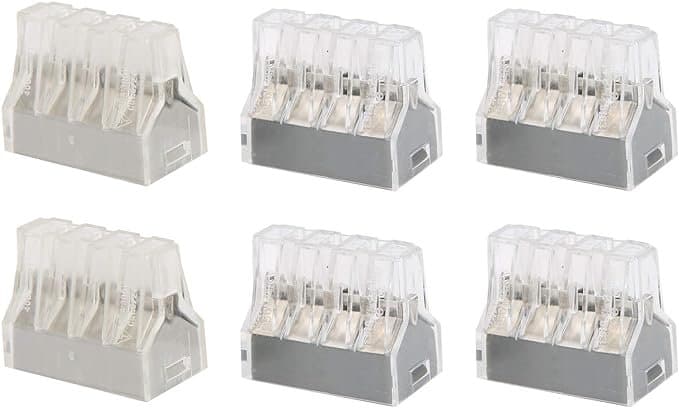
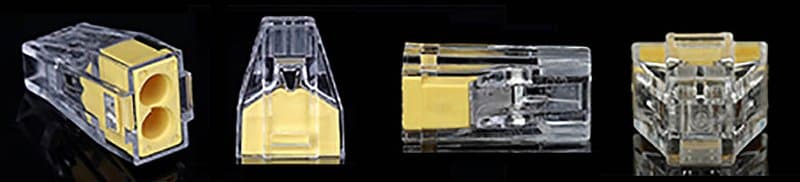
The PCT-102 is a 2-port push wire connector rated to 250V, used for inline termination of CCTV power and control conductors. Spring clamp terminals accept solid and stranded copper without a screwdriver or crimp tool, which matters on install jobs where you're joining or extending runs inside a junction box rather than at a panel.
Key specs
- Ports: 2 independent push-wire terminations per connector
- Voltage rating: up to 250V — covers low-voltage CCTV/alarm feeds and mains lighting/control circuits on the same part number
- Conductor types: solid and stranded copper
- Termination: push-in spring clamp, tool-free
- Housing: transparent insulated body for visual confirmation of insertion depth
- Form factor: compact inline, sized for junction boxes, camera housings, network cabinets and electrical enclosures
Where it fits on the job
Use the PCT-102 anywhere you need a quick, reliable in-line joint rather than a screw terminal block — extending a camera's power feed inside a housing, tapping a control circuit in a junction box, or making up alarm wiring in a distribution enclosure. Because it's rated for both low-voltage and mains-level wiring up to 250V, one connector type covers CCTV power drops and lighting/control circuits, simplifying what installers need to carry.
The transparent housing is a practical check on-site: you can see the copper seated fully before closing up the enclosure, rather than relying on a tug test.
Technical Specifications
Frequently Asked Questions
What conductor types does the PCT-102 accept?
Both solid and stranded copper conductors, as used in typical CCTV power and control cabling.
Can the PCT-102 be used on mains wiring as well as CCTV power?
Yes — it's rated up to 250V, which covers low-voltage CCTV/control circuits and mains-level lighting/control wiring.
Do I need a crimping tool or screwdriver to fit it?
No, it uses push-in spring clamp termination, so conductors are inserted directly without tools.
How many conductors can one PCT-102 join?
It has 2 independent ports, so it joins or extends two conductor connections per connector body.