Product Description
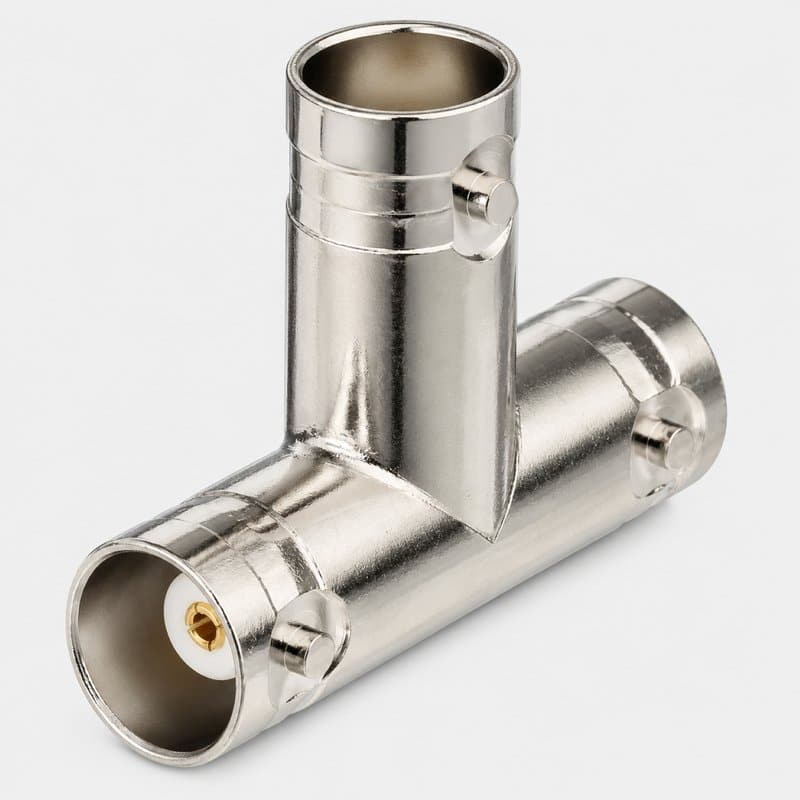
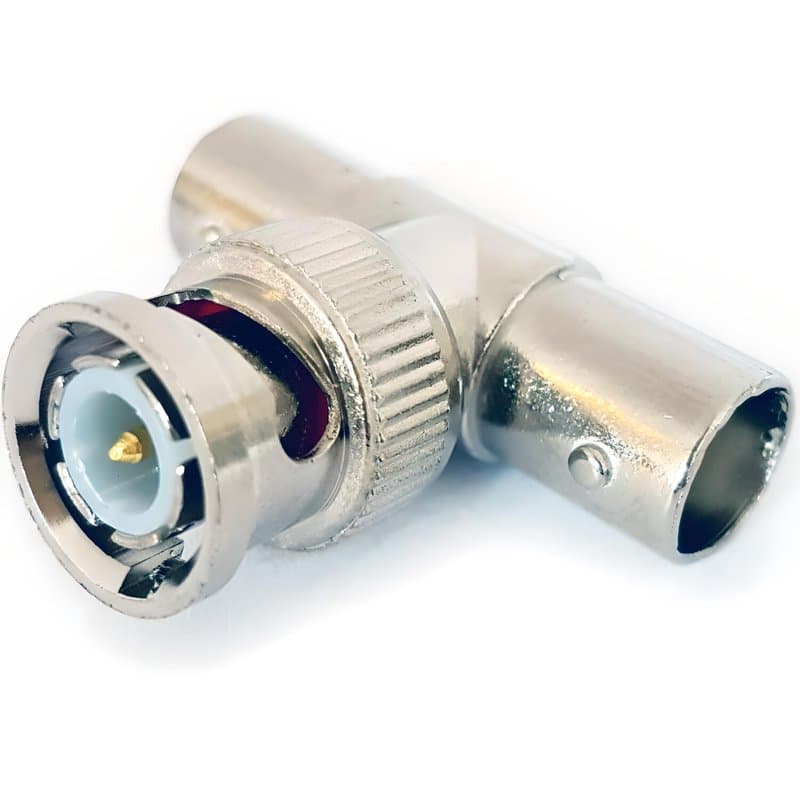
BNC-T-SPLITTER: BNC 3-Way T Splitter Adapter
One BNC male output feeds two BNC female ports — that's the core function of the BNC-T-SPLITTER, letting a single video source drive two downstream devices from one coax run.
Signal compatibility
The BNC-T-SPLITTER passes analogue CCTV signals as well as HD-over-coax formats: HD-TVI, AHD, and CVI. It works over RG59 and RG6 coaxial cable, the two coax types standard in UK CCTV installs.
Where it fits on a job
Typical use is splitting one camera's output to feed both a recorder and a local monitor, or adding a test-monitor tap into an existing run without disturbing the main recording path. It's equally suited to bench testing, rack termination, and expanding monitoring points on live systems.
Build
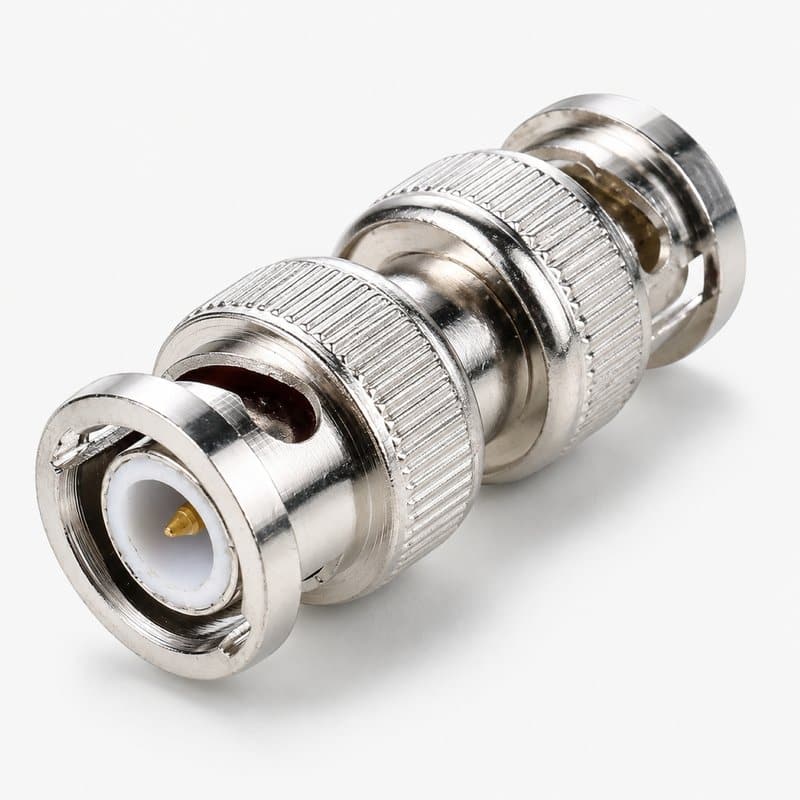
Metal body construction throughout, chosen for a secure mechanical connection at the BNC interface and stable signal transfer rather than for weight or cosmetics. Compact T-shaped profile keeps it manageable in tight rack space or dense cable runs.
Key specs
- Configuration: 1x BNC male in, 2x BNC female out
- Cable compatibility: RG59, RG6
- Signal formats: analogue, HD-TVI, AHD, CVI
- Application: DVRs, cameras, monitors, test equipment
- Body: metal
Note this is a passive splitter — it distributes the signal but doesn't amplify it, so run length and cable quality still govern overall signal integrity on each leg.
Specifications
- Brand
- Unbranded
- Colour
- Silver
Frequently Asked Questions
Does the BNC-T-SPLITTER work with HD-over-coax cameras, or only analogue?
It supports HD-TVI, AHD and CVI formats alongside standard analogue CCTV signals.
What cable does the BNC-T-SPLITTER need?
It's compatible with both RG59 and RG6 coaxial CCTV cable.
Can the BNC-T-SPLITTER feed a monitor and a recorder from one camera?
Yes — the single BNC male input splits to two BNC female outputs, so one source can feed two separate devices such as a DVR and a monitor.
Does the BNC-T-SPLITTER boost or amplify the signal?
No, it's a passive splitter, so cable length and quality still affect signal integrity on each output leg.