
Cameras
Shielded CCTV Cameras: EMC/EMI Explained 2026
A "shielded" CCTV camera almost always means EMC/EMI-hardened for high-field environments — substations, railways, test chambers — not the vandal- or…
On this page
- What does "shielded" actually mean on a CCTV camera?
- Why fibre matters here
- When does EMI/RF shielding genuinely matter?
- Genuine use cases
- Why EMC-test cameras look different on the datasheet
- Is this just marketing fluff on a standard commercial camera?
- How do you check the cable and connector, not just the camera?
- A decision checklist: do you need a shielded camera, or a shielded cable run?
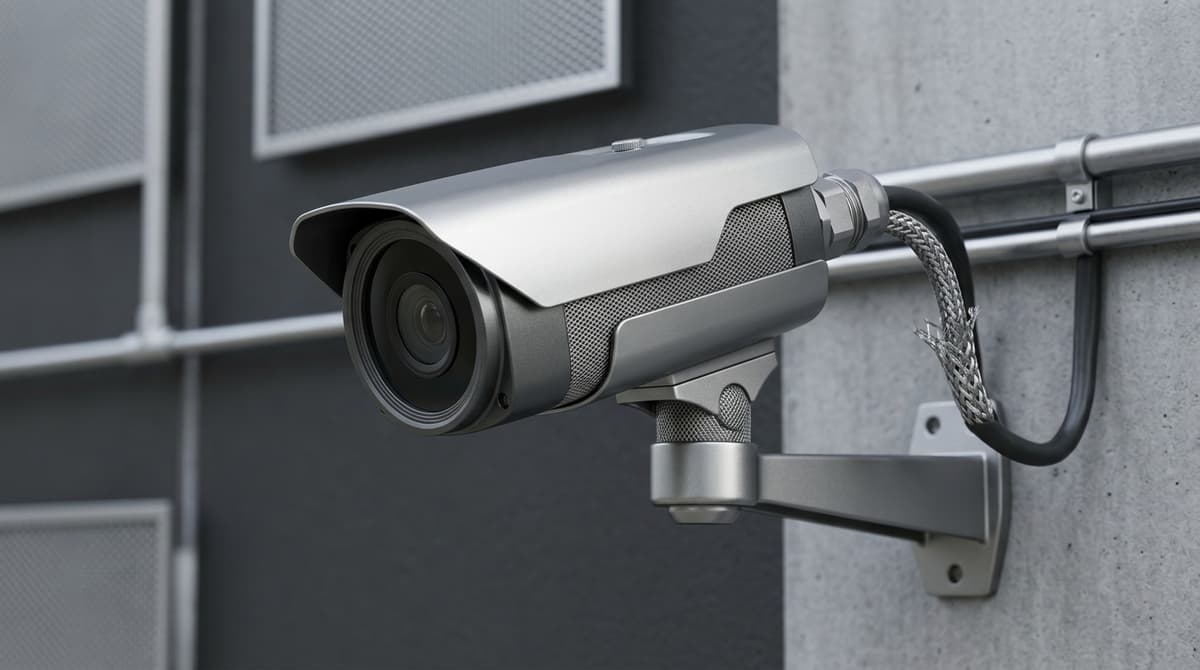
A "shielded" CCTV camera almost always means EMC/EMI-hardened for high-field environments — substations, railways, test chambers — not the vandal- or weather-resistant housing most UK buyers actually need. The two specs solve completely different problems, and if you order genuine EMI shielding when you really just wanted an IP67 turret with a rain hood, you'll pay a substantial premium for protection your site will never use.
Weatherproofing and EMC shielding sit on different scales entirely: an IP67-rated turret keeps out rain and dust, while EMC hardening keeps electrical noise from substations or railway signalling equipment off your video feed. Confusing the two is the single most common ordering mistake we see from installers who've been told a site is "electrically noisy" without anyone specifying to what standard.
What does "shielded" actually mean on a CCTV camera?
True shielding is an enclosure and cable design that blocks electromagnetic interference (EMI) and radio-frequency energy from reaching the video signal — it has nothing to do with keeping rain or knocks out. That distinction matters because "shielded camera" gets used loosely across the trade, and confusing it with weatherproofing or impact resistance leads buyers to the wrong product entirely.
Key takeaway: "shielded" ≠ "weatherproof" or "toughened". An IP67-rated camera is sealed against dust and temporary water immersion, and an IK-rated housing resists a defined impact energy — neither test involves electromagnetic fields at all. A camera can be fully IP67 and still have zero EMI shielding, and vice versa; always check the specific model's datasheet for the IP/IK figures rather than assuming they carry across a range.
Genuine EMC (electromagnetic compatibility) shielded cameras are a different category of product, built for environments where radio-frequency or electromagnetic noise would otherwise corrupt the image or trigger interference into other equipment — test chambers, substations, MRI-adjacent rooms, defence and broadcast sites. Per Pontis EMC, these units combine a hardened, EMC-rated enclosure with fibre-optic video and control links rather than standard copper cabling, so no EMI can couple onto the signal path between camera and recorder.
Why fibre matters here
- Copper video/control cable acts as an aerial for RF energy; fibre carries light, so it's immune to it.
- Purpose-built EMC housings are designed to attenuate emissions and resist immunity testing well beyond ordinary limits, per the Pontis EMC product line.
When does EMI/RF shielding genuinely matter?
Shielding earns its keep only where ambient electromagnetic fields are strong enough to corrupt the video signal or cable run — not on a typical shop, office or house install, where a standard PoE camera and a decent cable run cause zero interference problems. Most UK sites never generate field strengths anywhere near what would disturb a video signal, so an EMC-rated camera is solving a problem that doesn't exist there.
Genuine use cases
Real demand for an EMI shielded camera or RF shielded CCTV setup clusters around a handful of environments:
- Substations and HV switchgear compounds, where switching transients and high-voltage fields are routine.
- Railway traction and signalling areas, close to overhead line equipment and power electronics.
- Industrial plants running large motors, VFDs or inverters that radiate broadband noise.
- RF test chambers and anechoic rooms, where the camera itself must not pollute the measurement.
- Sites with mandated EMC compliance testing, where any equipment inside the chamber has to meet defined emission and immunity limits.
Key takeaway: if your site doesn't generate strong ambient fields — no HV switchgear, no traction supply, no test chamber — a standard camera and a well-terminated cable are the right spec, not a shielded one.
Why EMC-test cameras look different on the datasheet
Purpose-built EMC compliant CCTV cameras are rated in field strength rather than the usual lux and IP figures installers are used to. The ETS-Lindgren 4350 EMCam is rated to withstand fields up to 600 V/m, while the Pontis HDCam75 is rated at 200 V/m up to 40 GHz.
Is this just marketing fluff on a standard commercial camera?
Often, yes. In most retail listings "shielded camera" just means a metal housing or a screened cable — not a tested electromagnetic-compatibility rating, and there's a real difference between the two. Browse the 7 camera kits category to see how standard kits are specified, or compare our 2 camera kits for a simpler starting point.
A genuine EMC-shielded camera will publish a shielding-effectiveness figure in V/m and name the test standard it was measured against, not just describe a metal case. Pontis, for example, quotes emissions performance against CISPR 25 for its HDCam75, stating very low emission and very high immunity — the kind of documented, third-party-testable claim that separates an EMC-compliant CCTV camera from one that's merely described as "shielded" on a product page.
Standard commercial cameras, by contrast, are built to environmental and lens specs, not EMC ones. A typical IP67-rated turret or bullet with IR for night-time range won't usually carry an EMI-shielded-camera or RF-shielded CCTV claim on its datasheet — because none is needed for the retail, office and residential jobs it's designed for. Always check the specific model's datasheet for its confirmed IP/IK rating before specifying it.
Where "shielded" does apply honestly to ordinary CCTV kit is the cabling, not the camera body. A shielded RJ45 pass-through plug for Cat5e STP cable (SKU RJ45-CAT5-Pass-Through-8P8C-Shielded) has a metal shielded housing that's designed to reduce EMI pickup on the data line — useful CCTV interference shielding near mains runs or plant rooms, but a cable property, not a certified camera enclosure.
How do you check the cable and connector, not just the camera?
On longer PoE or Ethernet runs, cable screening and RJ45 termination quality usually matter more than the camera's own housing. A shielded camera body helps at the lens end, but electromagnetic noise more often couples into the cable run itself, especially over tens of metres.
Cable type matters first. Screened or foiled twisted pair (STP/FTP) cable resists EMI pickup far better than plain unshielded UTP, particularly where CCTV cabling shares a containment route with mains wiring, motors or fluorescent ballasts — all common sources of the electrical noise that shows up as banding or drop-outs on an IP camera feed. If a run has to cross power cabling, STP/FTP is the sensible starting point rather than relying on the camera alone.
The connector is the weak point people forget. Braided or foiled cable is only as good as its termination, so we stock a shielded RJ45 pass-through plug for Cat5e STP cable (SKU RJ45-CAT5-Pass-Through-8P8C-Shielded) with a metal shielded housing designed to maintain that screening right through the plug, not just along the jacket.
Earthing needs to follow the site's design, not a fixed rule. Shield bonding is usually done at one end in line with the installation's overall earthing arrangement, but the right approach depends on the cabling system and equipment involved — bonding both ends can create ground-loop issues in some setups, so follow manufacturer guidance and site EMC practice rather than treating it as universal.
A decision checklist: do you need a shielded camera, or a shielded cable run?
Match the fix to the actual source of interference — most UK sites need a shielded cable run, not an EMC shielded camera. True EMI shielded cameras, built with filtered power and shielded housings for CISPR 25-type test environments, are a niche solution for labs and test chambers, not for the shop, warehouse or street install you're likely specifying.
Work through the source of interference before spending on anything:
| Situation | What actually helps |
|---|---|
| Standard shop/office/home install, no known EMI source | Standard IP67-rated turret or bullet camera — no shielding premium needed |
| Long cable run near mains, motors, or fluorescent fittings | Shielded (STP/FTP) cable and shielded RJ45 connectors, correctly earthed |
| Site with substations, HV switchgear, rail traction, or heavy industrial plant | Combination of shielded cable, fibre where practical, and enclosure/positioning review — treat as a specialist EMC job, not a standard install |
In the vast majority of UK jobs, the fault sits in the cable path, not the camera body. Cheap unscreened patch leads run alongside 230V mains, ballasts or motor starters pick up induced noise that shows as banding, rolling interference or dropped frames on the recorded image — a shielded CCTV camera won't fix that on its own.
For run number two in the table, a shielded RJ45 pass-through plug for Cat5e STP cable — like the metal-shielded 8P8C connector we stock (SKU RJ45-CAT5-Pass-Through-8P8C-Shielded) — only reduces EMI effectively when the shield is properly bonded to earth and the cable itself is genuinely screened, not just the connector. Browse our full CCTV product index to compare cameras and cabling side by side.